In this chapter we provide you with a framework for designing integrated sets of related texts that not only provide your students increased reading volume but also give them the critical background knowledge needed to make complex texts accessible.
Reading has cognitive consequences that extend beyond its immediate task of lifting meaning from a particular passage….Accumulated over time, they carry profound implications for the development of cognitive capabilities.
When it comes to teaching reading, we believe that many of the disputes surrounding best practices are the result of taking what is appropriate for some children and applying it to all learners.
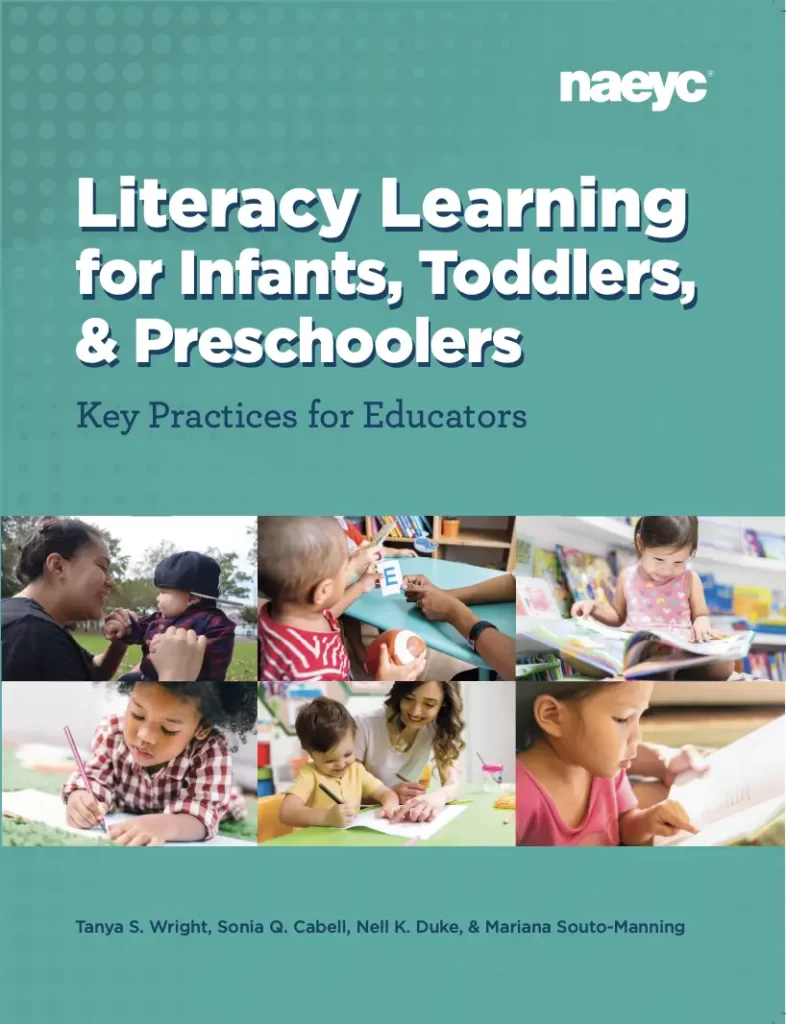
From some of the foremost early literacy development experts in the field comes this practical resource for all educators of infants, toddlers, and preschoolers.
If I were writing the headline for the next newspaper story on the SATs, here’s what you’d see: “Seniors and Their SAT Scores Sabotaged by Low-Level Textbooks.” The literacy level of our secondary students is languishing because the kids are not reading what they need to be reading.
In this article, the authors draw from 3 years of intensive work with multilingual students and their teachers to describe four principles to guide multilingual literacy instruction.
The collaboration in this study serves as a model for how academics, and practitioners can join forces and leverage their expertise to reach more students.
[W]e sought to gain insight into
the current state of literacy promotion education in pediatric residency programs and the barriers faced in educating pediatric residents from the perspective of residency program directors.
[S]tagnation in reading growth
leads to a probable conclusion that instructional factors that promote early reading development are
either missing or are receiving less-than-optimal emphases in many curricular reading programs.