In this chapter we examine motivation and engagement, the relationship between them, and how to foster both factors in our reading classrooms.

In this chapter we examine motivation and engagement, the relationship between them, and how to foster both factors in our reading classrooms.

How can teachers prepare young learners for the language demands of content area texts? This article presents linguistically informed strategies to support young learners navigating informational texts.

Prompted by new standards for increased text complexity, the review investigates the relationships
between text difficulty and reading fluency and comprehension.

The primary aim of Concept-Oriented Reading Instruction (CORI) is to increase students’ comprehension in Grades 3 to 5 by increasing their reading engagement…[T]he reading goals include the following reading comprehension strategies: understanding the main idea, making inferences, monitoring comprehension, and using fix-up strategies for information and narrative texts. We included oral reading and fluency vocabulary as enabling competencies. Click the image to read […]

Our goal is to provide a granular and systematic description of states’ efforts to improve reading instruction. Our analysis aims to facilitate a factual and nuanced discussion about literacy improvement among a broad range of stakeholders, including policymakers, families, practitioners, and scholars.

Although constructivism sounds deceptively simple in theory, many teachers encounter obstacles in creating constructivist classrooms. This constructivist approach to teaching literature gets students to do the talking and the thinking.

When teachers adaptively use explicit instruction to engage their students with text, they weave together several important elements of effective instruction: scaffolds, engagement, knowledge building, and intensity through coherence and increased content coverage.

Reciprocal teaching has been effectively implemented by teachers working in both small and large group
settings, in a peer tutoring situation, in content area instruction, and most recently in listening comprehension instruction.

The art of teaching acknowledges teachers’ judgment and its role in the critical decisions made by teachers regarding the SOR and the selection, preparation, delivery, and assessment of literacy activities within the social interactions of the classroom.
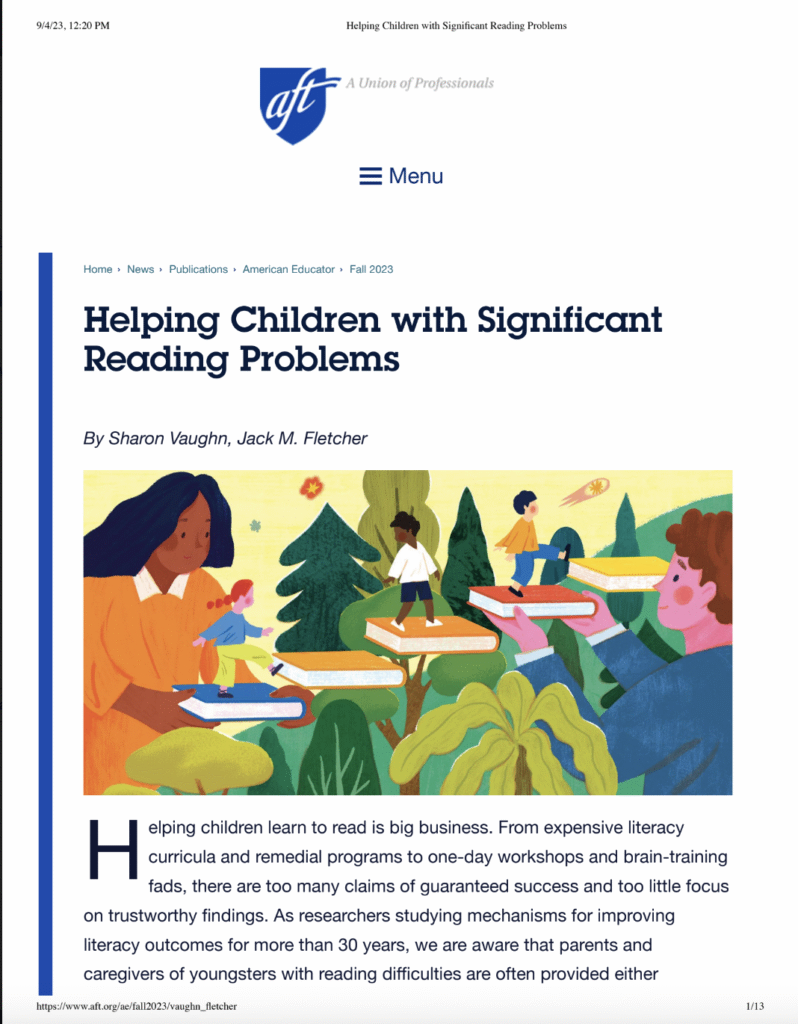
As you think about how to support your child’s reading development, the most important consideration is that they need as much time in reading and language arts instruction as possible.

 45
45 0
0

 1.12k
1.12k

 4501.12k